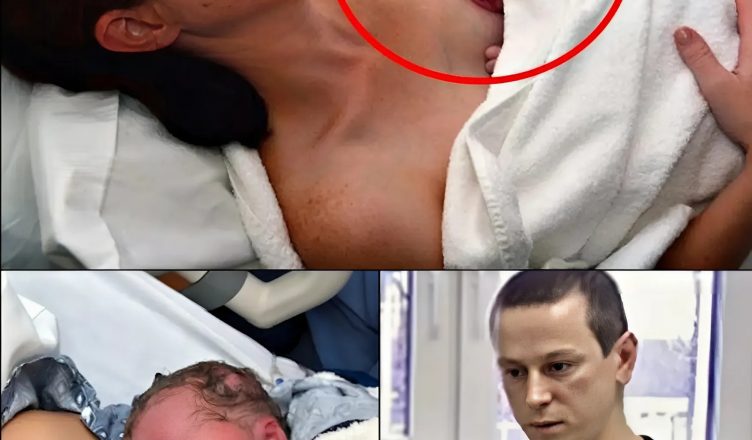
It started like many stories do — quietly, without warning. Zoia, a young woman expecting her first child, chose to spend the final months of her pregnancy at her mother’s home. Not because of crisis, but because the silence at home had grown too loud.
Her husband had grown cold. He barely spoke when he saw her growing belly. He flinched at baby names. Avoided conversations about the future. Every time she mentioned the child, a wall seemed to rise behind his eyes.
“Don’t worry,” her mother whispered, “he’ll melt the moment he sees the baby.”
Zoia smiled, but the doubt was a seed that had already taken root.
Their love had once been fast and full of fire. A whirlwind courtship, a rushed wedding, and the start of something that felt boundless. They had moved into a large apartment her husband had inherited from his grandfather. But they weren’t alone — his mother, Angelina Pavlovna, still lived there. A widow. Strong-willed. Polite, but sharp.
She had never accepted Zoia. Never openly, never cruelly. But the chill in her words said enough. Zoia found herself tiptoeing through her own home, silenced by glances, wounded by indifference. Her husband? Absent. First in time, then in spirit.
When Zoia told him she was pregnant, he didn’t smile. He didn’t hold her.
He simply said, “Are you sure this is the right time?”
From that moment, she stopped hoping for warmth. She left to be with her mother — where, if nothing else, she could breathe.
Labor was long, but the baby girl was born healthy. Soft. Beautiful. Perfect.
Zoia didn’t cry. Not from joy, not from pain. She felt like she had already wept everything dry. Her husband hadn’t come to the hospital. Not on the first day. Not on the second. He didn’t call. He didn’t ask.
On the third day, she sent him a message:
“Will you come pick us up?”
His reply was cold and short: “I can’t. I’m busy.”
The day of discharge arrived. Zoia stood near the exit, watching other mothers leave with flowers in hand and husbands beaming beside them. She held her daughter close. Alone.
And then, she saw him. Standing a few steps away. No flowers. No expression. Just him — still, unreadable.
“You came?” she asked.
He didn’t answer. Just stepped forward.
“Can I hold her?” he said at last.
She didn’t speak. She simply placed their daughter in his arms.

He looked down at her. And then — everything changed.
There, on her tiny wrist, was a birthmark. Small. Faint. Oval. Exactly like the one his younger brother had — the brother who had died in a tragic accident as a child. The same shape. The same place.
He stared. His lips parted but no sound came.
His face lost its color. His eyes welled.
He sat on the bench behind him, daughter in arms, trembling.
“I’m sorry…” he whispered.
That moment rewrote everything.
Not all at once. Change came slowly, like spring after a long, hard winter. But it came.
He began coming home early. He watched his daughter sleep. He helped with feedings. He spoke to Zoia — not just words, but with presence. He wasn’t perfect. But he was there.
Later, one night, he told her what she already knew:
“I wasn’t afraid of her. I was afraid of myself. Afraid to fail. Afraid to love. Afraid to lose again.”
That mark — that simple, silent symbol on their daughter’s hand — had broken something open in him. It reminded him of the boy he had lost. But more than that, it reminded him of the man he still had a chance to become.
This story didn’t go viral because of drama. It went viral because it was human.
It spoke to people’s deepest fears — of responsibility, of failure, of repeating old grief. It showed how pain can close a heart, and how something so small — a glance, a gesture, a birthmark — can open it again.
It wasn’t about perfection. It was about presence. About showing up, even if it’s late. About second chances.
Because sometimes, the most powerful thing in the world is a tiny hand with a memory in its skin — and a father finally brave enough to hold it.