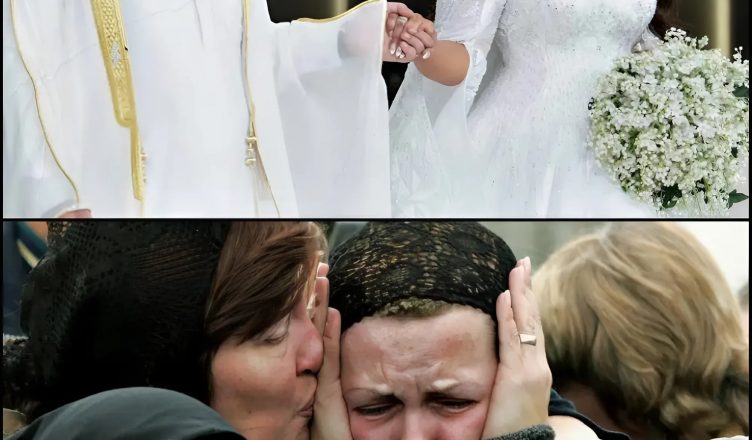
Tereza always dreamed of a different life. Growing up in a small Mexican town where opportunity was scarce and hard work rarely paid off, she often imagined a way out — something brighter, something safer. So when her cousin Josefa, now married and living in the opulence of Dubai, invited her to the UAE for a second wedding ceremony steeped in tradition, Tereza didn’t hesitate.
She boarded the plane believing her life might finally be about to change. She was right — but not in the way she hoped.
Within 48 hours of her own wedding to a wealthy Arab businessman, she was dead.
A city of gold, a chance encounter
Dubai overwhelmed her. Towering glass skyscrapers, air-conditioned malls larger than her entire hometown, and streets lit up like a movie set. Josefa welcomed her into a world Tereza had only ever seen in magazines: luxury cars, designer gowns, security gates, servants in crisp uniforms.
At Josefa’s grand wedding, she met Khalid — elegant, refined, much older. He was wealthy beyond imagination. Real estate, oil shares, private jets. But what struck Tereza was how intently he looked at her. He praised her innocence, her modesty, her quiet voice.
Two days later, he proposed.
Josefa encouraged her. “This is your chance. Don’t think. Just say yes.”
Tereza, overwhelmed but flattered, said yes.
A wedding made of silk and gold
Their ceremony was breathtaking. Guests in formal robes, rare perfumes in the air, a feast of delicacies she couldn’t pronounce. Tereza wore a hand-embroidered dress and jewels she was afraid to touch.
In photos, she smiled. But the photographer would later say her expression seemed guarded. As if she already sensed something she couldn’t name.
That night, they left for a private villa on the city’s outskirts.
By morning, Tereza was dead.
Official story: cardiac arrest
Authorities ruled it sudden heart failure. No bruises, no drugs, no apparent trauma. The body was cremated within two days, in line with “family customs.” No autopsy. No further questions.
Her parents in Mexico received a call — and little else. There would be no funeral, no remains to bring home, no chance to say goodbye.
They were told to accept. But they couldn’t.
The unofficial truth: a darker system
Local human rights contacts and anonymous insiders began sharing what they knew: Tereza may not have died of natural causes.

In some elite circles, there exists a shadowy practice — temporary marriages with foreign women. These contracts, often signed in languages the women can’t read, bind them to roles that severely restrict their rights. They must obey. Be silent. Serve. Leave behind their culture, their language, their autonomy.
According to an unnamed legal consultant, Tereza reportedly resisted certain demands on her wedding night. A fight broke out. She may have been given a sedative.
She never woke up.
But with no body and no independent investigation, nothing can be proven.
Legal silence, diplomatic walls
Mexico had no jurisdiction. UAE authorities closed the case in under 48 hours. Josefa refused to speak with the family again. Khalid remained invisible, untouchable.
Tereza’s death became a whisper — a forgotten note in a powerful man’s story.
Her parents were left with no answers. Only ashes. And silence.
A mother speaks
Her mother’s voice cracked during a radio interview in Guadalajara.
“She wasn’t stupid. She was trusting. She wanted a new life, a good life. They took it from her. And they won’t even let us ask why.”
She has written letters to officials, posted online appeals, begged journalists to tell her daughter’s story.
Few listened. Fewer responded.
A pattern, not a tragedy
What happened to Tereza is not a bizarre exception. It is part of a pattern — women from economically vulnerable backgrounds drawn into contracts disguised as love. No one tells them about the isolation. About the fine print. About the power imbalance so extreme, it becomes dangerous.
Not all such marriages end in death. But many end in silence.
And silence is a kind of violence, too.