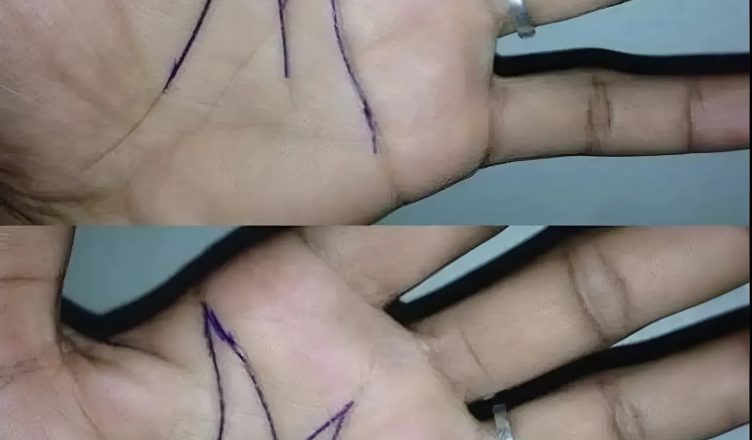
When we look at our hands, the lines on our palms often catch our attention, forming a complex network of folds and patterns. These patterns may seem random, but for centuries, they’ve fascinated people, who saw them as clues to one’s destiny, character, and even hidden talents. From ancient Eastern palm readers to modern researchers in biology and psychology, the lines on our palms have always raised questions, sparked curiosity, and inspired the search for answers.
But what do these lines actually mean? Where do they come from, and why are their shapes different for every individual?
Why Do We Have Lines on Our Palms?

The formation of lines on our palms begins long before birth, during fetal development. By the third month of pregnancy, as the tiny fingers start to move, the skin on the fetus’s palms starts to fold, creating unique patterns. These folds allow the skin to stretch and flex more easily, improving its flexibility and grip. Far from mystical significance, palm lines serve an essential practical function: they make the hands more resilient to repeated movements, friction, and pressure.
Beyond their practical role, the lines on palms are distinctly individual. Even monozygotic twins, who share the same genetic makeup, do not have perfectly identical palm lines. This uniqueness not only helps identify individuals but also provides clues about their health and development.
Palms as Indicators of Health
Modern science has found links between the skin patterns on palms and certain genetic conditions or biological traits. For example, research shows that specific line formations may indicate a predisposition to certain congenital syndromes. This doesn’t mean you can diagnose yourself by simply looking at your hands, but scientists continue to explore these connections in hopes of using them for early screenings in the future.
A Cultural Perspective: Palm Lines Through History
Over the centuries, palm lines have been interpreted in a variety of ways by different cultures. In ancient India, palmistry was part of Vedic traditions, tying these lines to karmic milestones and life’s spiritual stages. In China, they were studied alongside the philosophy of yin and yang, the five elements, and internal energy, viewed as indicators of health and balance.
In European traditions, often influenced by alchemy and mysticism, palmists claimed that “life lines” or “heart lines” could reveal longevity, emotional intensity, or even the number of children one might have.
While these interpretations may seem outdated to many today, their cultural legacy remains. Many still take an interest in palmistry, not as a predictive science but as a tool for self-reflection and understanding.
Palms as a Mirror of Personality
Some psychologists note that observing palms can offer interesting insights into a person. This isn’t about magic, but rather about noticing subtle details that reflect daily habits, activities, or even certain personality traits. For example, someone who works heavily with their hands may have more pronounced lines, showing repeated movements and effort.
Psychologists sometimes use hand observations to better understand a patient: their gestures, posture, and habitual motions. Palms, being highly sensitive, often reveal subtle clues about how a person expresses their emotions, how they feel in the moment, and even their preferences in social interactions.
Conclusion: Lines That Tell a Story
Palm lines aren’t just simple skin folds. They’re a record of your unique journey. Formed in the womb, they grow with you, reflecting not only physiological processes but also the finer details of your life. While tradition may give them mystical meaning, modern research sees them more as a “biography” of your body.
Have you ever looked at your palms and wondered what stories they would tell if they could speak? Maybe there aren’t prophecies to be found, but they remind us of something even more valuable: our individuality, our uniqueness, and the one-of-a-kind life that each of us leads.