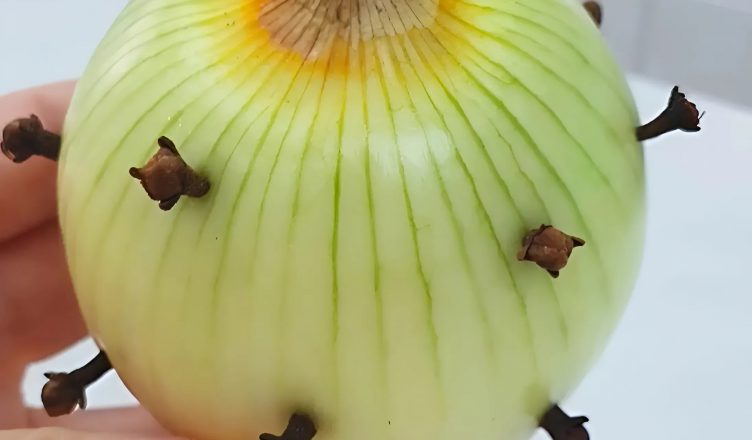
When I was a child, I used to watch my French grandmother cook with a kind of quiet awe. Everything she did seemed intentional. Every ingredient had a purpose. But there was one ritual that stood out and puzzled me for years: she would take a whole onion, peel it, and stick cloves into it — one by one — like she was decorating a spiked fruit.
It looked strange. Maybe even a little eerie.
I thought it was superstition.
Or just another one of her “old lady habits.”
But one day, curiosity won over.
“Why do you always put cloves in an onion?” I asked.
Her answer?
“Because it works. For everything.”
I didn’t get it back then.
Now I do it myself. And let me tell you — she was absolutely right.
It Starts in the Kitchen — but Doesn’t End There
At first, I assumed this was some odd flavor trick. And in part, it is. The practice is called “piqué” in classic French cuisine — it means “pricked.” You take whole cloves and press them into a peeled onion, then toss it into a stock pot, sauce, stew, or soup.
The result?
A subtle, complex warmth. Not overpowering. Not spicy. Just deep, aromatic, comforting.
It enhances flavor in a way that’s hard to describe — until you taste it.
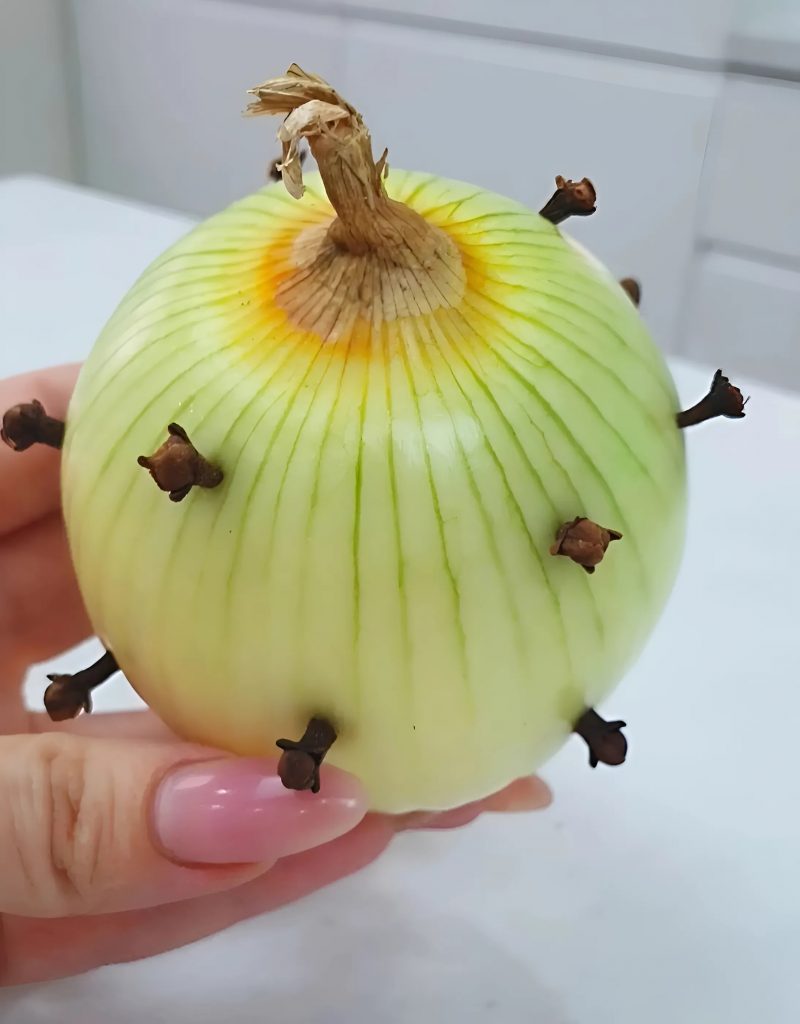
Chefs do it to this day in traditional French kitchens. My grandmother learned it from hers. And now I do the same.
But Then Came the Bigger Surprise
One day, I noticed something strange. She wasn’t cooking. But there was still an onion on the windowsill. Covered in cloves.
“What’s this one for?” I asked.
“Not for eating,” she said.
“For the air.”
That’s when I learned that an onion pierced with cloves is a natural air purifier and deodorizer. The onion draws in moisture and absorbs odors. The cloves release a strong, spicy aroma that’s antibacterial, antifungal, and refreshingly clean.
No sprays. No synthetic fragrances.
Just two ingredients that have been used for centuries.
And it works — remarkably well.
A Natural Insect Repellent (That Actually Works)
Another time, during summer, I saw her put a clove-studded onion near the fruit basket.
“Fruit flies,” she said.
“Won’t come near it.”
Turns out, cloves are a known insect repellent. They keep flies, moths, and even mosquitoes away. Combined with the sulfuric compounds in onions, the smell becomes even more effective — without any chemicals or traps.
She’d place one near doors, windows, and corners of the pantry.
And guess what?
We never had a bug problem.
When Someone Got Sick — Out Came the Onion and Cloves
Every winter, without fail, when someone caught a cold, she’d reach for her trusted combo.
She’d simmer a whole onion, clove-studded, in water with lemon and honey.
Then strain it and serve it warm.
“Drink it slowly,” she’d say.
“It’ll open you up.”
And it did.
The onion eased the congestion.
The clove soothed the throat.
Together, they fought off colds better than any syrup.
It wasn’t pretty. But it worked.
And somehow, it made you feel… cared for.
A Household Trick with Lasting Power
One of the things that continues to amaze me is how long these clove-studded onions last. They don’t spoil quickly. The cloves seem to slow the onion’s decay. I’ve left one out for over a week, and it still held up — releasing a gentle scent and keeping the air crisp.
Today, I use them in multiple ways:
In soups and broths for flavor
On the counter to absorb cooking odors
Near windows to keep insects away
In bedrooms during flu season
Even as rustic home decor
A single onion and a few cloves — that’s it.
A Quiet Wisdom Passed Down
I didn’t realize it at the time, but watching my grandmother press cloves into an onion was like watching a ritual of gentle rebellion against modern overconsumption. No sprays, no plug-ins, no pills. Just old-world logic that works.
And as I do it now — in my own kitchen, in a much noisier world — I feel a strange calm.
A connection to something real.