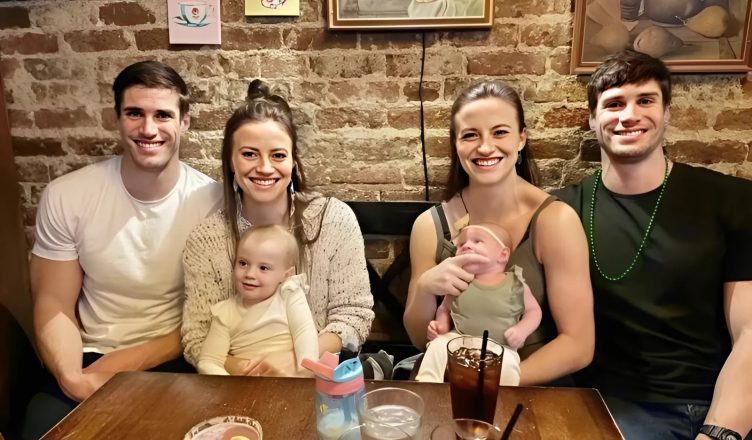
It sounds like fiction. A perfect script for a family sitcom or viral TikTok video. But this story is very real—and it’s fascinating people around the world.
In 2022, Brittany and Briana, identical twin sisters from the U.S., married Josh and Jeremy—identical twin brothers. The couples tied the knot in a shared ceremony, moved into the same house, and began what they called a “double life.”
A year later, each couple welcomed a baby. But here’s the twist that grabbed attention from scientists and the internet alike: the children, though technically cousins, are genetically full siblings.
A Life in Sync
Brittany and Briana have always lived mirror lives. Same clothes. Same schools. Same thoughts. Their bond was so deep that they even shared one dream: to marry identical twin brothers and raise families side by side.
They made that dream come true after meeting Josh and Jeremy at a twins festival in Ohio. The connection was instant. Within a year, both couples were married—together, in a joint wedding—and shortly after, moved into a single house to begin a life as one extended unit.
But they weren’t just doing it for the novelty. For them, it felt natural.
Cousins, But So Much More
In 2023, the two couples had children just months apart. One boy, one girl.
Legally, the babies are cousins. But because both mothers and both fathers are monozygotic twins—they each share 100% of their DNA—the genetic profiles of the children are indistinguishable from those of full siblings.
In short: even though they have different parents, they are genetically brother and sister.
Scientists call them quaternary siblings, a term so rare it hardly appears outside of genetic research. But in this case, it’s the only accurate label.
Growing Up Like Twins
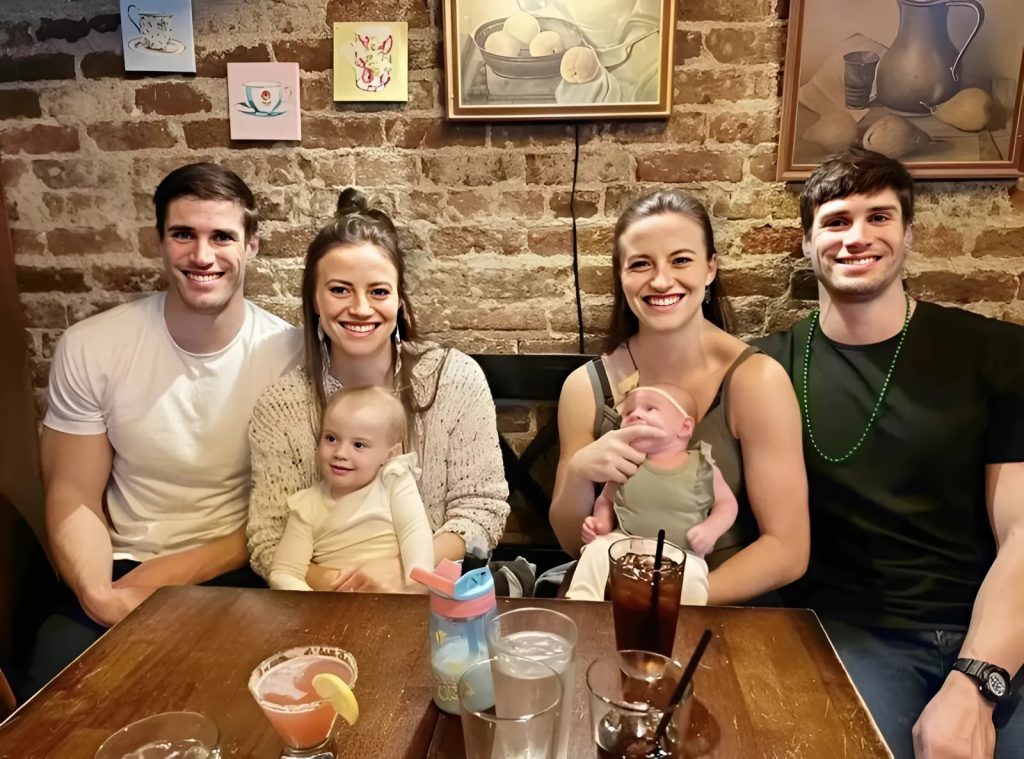
Brittany and Briana live with their husbands and children under one roof. The kids share everything: meals, toys, naps, and bath time. Their routines are aligned, and according to their parents, so are their personalities.
Even at a young age, the children show a strong emotional bond. They comfort each other, react to each other’s laughter and cries, and already seem to communicate in ways that feel more like siblings than cousins.
Photos of the babies often go viral. Their resemblance is striking. In pictures, they could easily be mistaken for twins—and, in many ways, they are.
Viral by Nature
The family’s life has captured global attention. Their social media content garners millions of views and thousands of comments. People are curious, amazed, and often speechless.
Some find the story heartwarming, others are simply fascinated by the rare scientific reality. The most common reaction? “I’ve never seen anything like this.”
What started as a dream between two sisters has become a living example of how genetics, family, and love can intersect in ways no one expects.
What Science Says
Geneticists confirm that this kind of situation is exceptionally rare. The likelihood of two sets of identical twins meeting, falling in love, getting married, and having children at nearly the same time is already small.
But what makes it truly unique is that their children are 100% genetic siblings—yet born to separate parents. It blurs traditional definitions of family.
For scientists, this real-life case is not just an oddity—it’s a glimpse into the complexities of human heredity and identity.
What’s Next for the Double Family
The couples say they’re open to having more children and want to continue raising them as one big, supportive unit. They’ve spoken about writing a book or participating in a documentary, not for fame, but to show the beauty and uniqueness of their story.
They also want people to understand that, while their lifestyle may seem unusual from the outside, for them, it’s completely natural. Their children will grow up with double the love, double the support, and an unbreakable bond—both biological and emotional.
“We’re not just cousins or siblings,” one of the parents said. “We’re something the world doesn’t have a name for yet. But it works.”