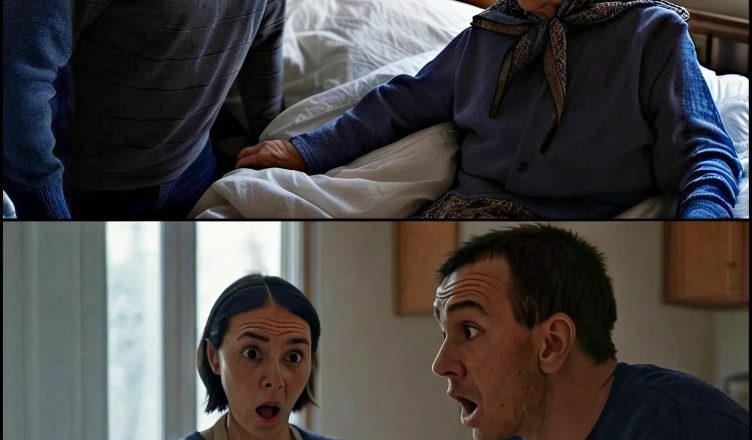
Oksana Petrovna sat alone in her small kitchen, staring at the cold, silent washing machine that had finally died after fifteen faithful years. It gave one last groaning shudder that morning and never spun again. She had already ordered a new one — delivery was scheduled within the hour — but her aging joints and fragile back wouldn’t allow her to move the old machine or install the new one.
Reluctantly, she reached for her phone and dialed the number of her younger son, Taras. Her fingers trembled slightly, though from age or emotion, she couldn’t tell. She wasn’t one to ask for help, and certainly not often. But today, she had no choice.
The phone rang. Once. Twice. Then a click.
But it wasn’t Taras who answered.
A female voice — cold, clipped, unmistakably irritated — cut through the silence.
“Hello?”
It was her daughter-in-law.
“Ah, hello, dear. Is Taras home?” Oksana asked gently.
“He’s working. What do you need?”
Already, there was something in her tone — a sharpness, a wall.
Oksana hesitated, then spoke. “I’m getting a new washing machine delivered. I just… I need someone to help move the old one out. It’s very heavy and—”
“You’re seriously calling about this?” the woman snapped. “Taras has work. We have kids. A life. He’s not your servant. He doesn’t owe you anything.”
The words landed like slaps. Sharp. Final. And without a trace of hesitation.
A Wound Deeper Than Silence
Oksana didn’t argue. She simply hung up the phone and sat in silence for a long time. Not in anger. Not in self-pity. Just silence. The kind that settles when something important shifts inside you — when you realize a line has been crossed, and there’s no going back.
She thought of the nights she stayed up sewing Taras’s school uniforms by hand. The winters when she skipped meals so he could have new boots. The time she sold her wedding ring to pay for his university textbooks. And now — «He doesn’t owe you anything.»
It wasn’t the words that hurt the most. It was the certainty with which they were said.
A Decision Made Quietly, But Firmly
The next morning, Oksana woke early. She made tea, dressed carefully, and pulled out an old notebook where she kept important papers. Among them was the deed to her apartment — the two-bedroom flat she had lived in for nearly thirty years.
By ten o’clock, she was sitting in a municipal office with a lawyer and a social worker. By noon, the paperwork was complete.
Oksana had signed over her apartment — not to her son, as many would have expected, but to a woman named Lena. A single mother of two small boys. Lena had once been Oksana’s student in the third grade. She now lived in a rented room with peeling wallpaper and broken heating, trying to survive on a nurse’s salary. The gift of a home would change her entire life.
When asked for a reason, Oksana simply said, “She visits me. She listens. She cares. That is enough.”
The Outrage
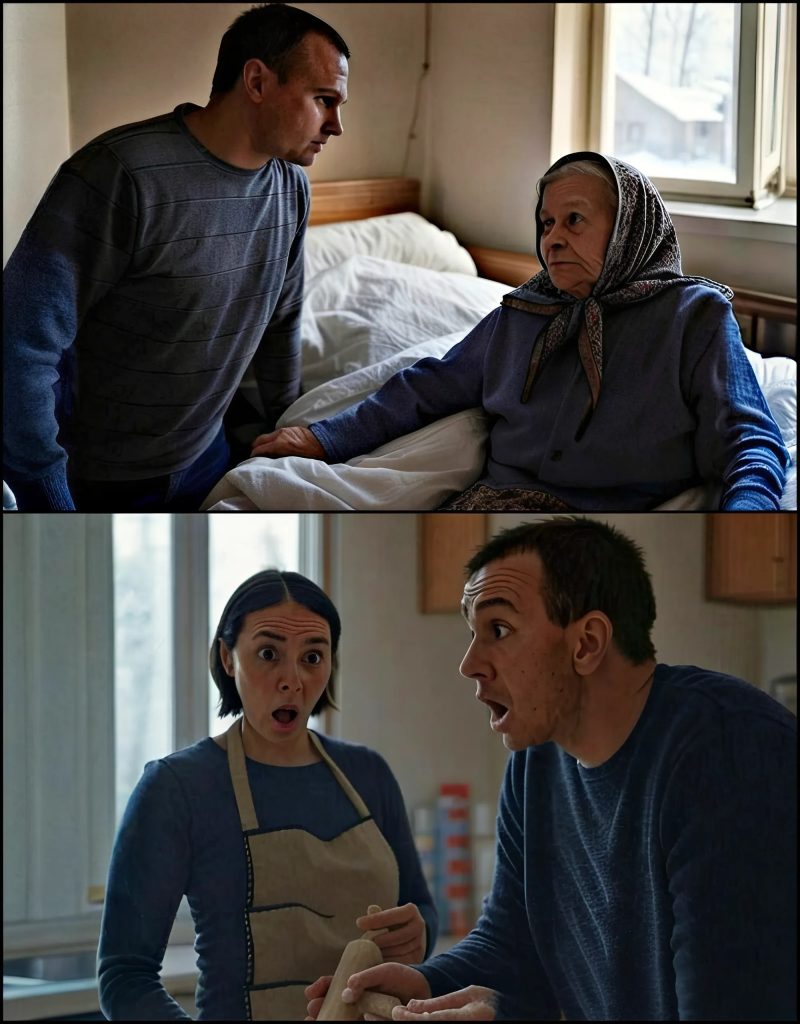
Taras and his wife found out within days. They stormed into her apartment unannounced, voices raised.
“How could you do this?” his wife shouted. “That flat was supposed to be for us. For our children!”
Taras looked shaken, but angrier than anything else. “Why would you give away your home to a stranger?”
Oksana looked up from her chair, calm, composed.
“She’s not a stranger. She’s someone who still sees me as a person.”
Then she added quietly, “And I simply followed your advice. You said you owe me nothing. So now, neither do I.”
The room fell silent.
Why This Story Touched Millions
Because it’s real. Because it’s raw. And because it speaks to a quiet truth many are too afraid to say aloud: that love, respect, and connection are not inherited. They’re earned.
Thousands who read Oksana’s story online began sharing their own. Stories of elderly parents forgotten. Of children too busy to call. Of sacrifices made and never acknowledged.
But also — of strangers who became family. Of compassion where blood failed. Of dignity restored, not through confrontation, but through choice.
In the comments, people wrote:
“My grandmother did the same. We only visited her for birthdays, and then were shocked when her house went to her neighbor.”
“Sometimes the ones who have the least give the most.”
“This story hit me like a brick. I haven’t called my mom in two months. I’m calling her now.”
The Last Years
Oksana lived another five years. Quietly. With dignity. Lena and her children became her second family. They brought her groceries, fixed what was broken, made her feel like she mattered. When Oksana passed away, her funeral was small — but every person there had truly known her.
Taras came. But he stood in the back. He said nothing. And maybe for the first time, he realized how far they had drifted — and how little effort he had made to return.