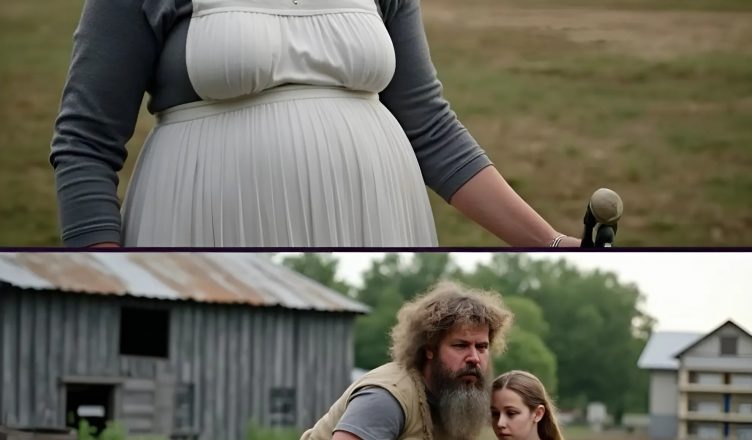
Marina had always been strong. Not by choice, but by necessity. Life didn’t leave her room to be soft. She had learned not to cry, not to complain, not to break under the weight of misfortune. When her husband abandoned her with their paralyzed daughter, Masha, she endured. When she had to return to her childhood village with nothing but shame and sorrow, she kept her head down and worked. When people whispered behind her back, she held her chin up. She poured all her fear and rage into labor, into caring for Masha, into survival.
But now, something inside her ignited like dry grass catching flame.
“Masha is at the bathhouse… with him!”
It was Aunt Natasha who came running, breathless and frantic.
— Marina! Your Masha! She’s in the old bathhouse—with that vagabond! That one who hangs around by the river!
Marina’s heart slammed against her chest. She dropped the milk bucket. Cold white liquid splashed across her boots. For a moment, she stood frozen, then bolted down the muddy path without a word.
The old bathhouse was barely in use anymore—an aging wooden structure on the edge of the village, abandoned except by the rare old-timer or someone with nowhere else to go.
Marina stormed toward it, fear and fury surging through her. Masha can’t even walk—how could she end up there? And with him? Who gave him the right?
She flung open the bathhouse door, ready to scream, to strike, to save.
And then she froze.
A Scene She Never Expected
The dim light of the bathhouse flickered through steam. Inside, on a bench beside a worn tub, sat Masha. Her cheeks were flushed, her shoulders relaxed. She was smiling.
Kneeling in front of her was the man they called a vagabond.
His name, she later learned, was Pavel.
He wasn’t touching her inappropriately. He wasn’t threatening. He wasn’t even looking at her face. He was carefully washing her feet in warm water, holding her ankle gently like a fragile artifact. He murmured softly. Masha giggled.
He looked up, startled, when the door slammed open.
Marina stood there, speechless. The anger drained from her limbs.
Who Was Pavel?
Once, Pavel had been a history teacher. He had a family, a house, a career. A car crash had taken his wife and child, and something inside him had broken beyond repair. He left the city, the job, the memories. He drifted.
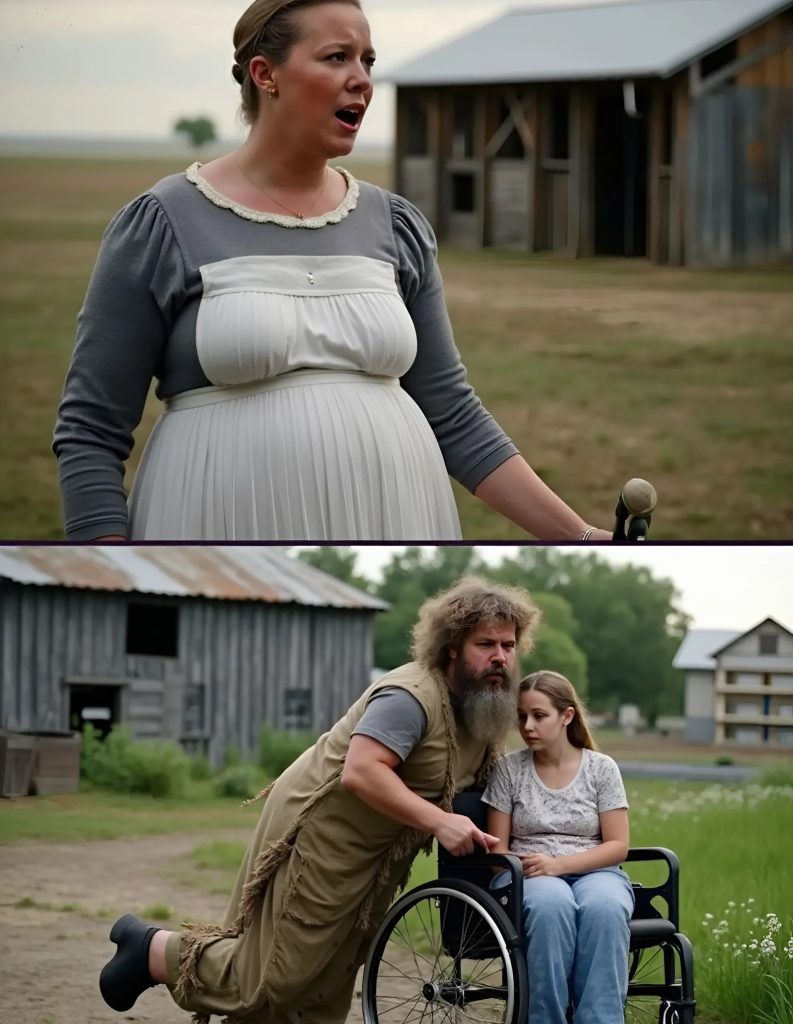
People didn’t understand him, so they feared him. Called him names. Avoided him. But Masha—she had looked past all that.
She had spoken to him first, from her wheelchair outside the market. He had replied with a story from ancient Rome. The next day, he brought a book. Then another.
They talked. They laughed. She felt seen.
He felt human again.
A Simple Act of Kindness
That morning, Masha’s muscles had been in pain. Pavel offered to carry her to the old bathhouse—warm water, he said, might help. She agreed.
He lifted her gently, like a father would his sleeping child. Not a word of protest. No shame. Only care.
He didn’t tell Marina. Not because he was hiding—but because, in his mind, it wasn’t wrong. It was simply the right thing to do.
The Moment Everything Changed
Pavel slowly rose, waiting for Marina’s wrath. Her shouting. A slap, perhaps.
But none came.
She stepped inside, closed the door behind her. Her eyes moved from his hands, to Masha’s joyful face, to the steaming water.
She sat down slowly.
— Thank you, she whispered.
The words cracked in her throat, but they came.
What Followed
After that day, Pavel wasn’t “that man by the river” anymore. He became “the one who helps Masha.” People began to greet him. Children listened when he told stories. Marina started leaving him bread, soup, a blanket.
He never asked for anything. But he gave what no one else did—time, dignity, peace.
He came back. Not always. But often enough.
Sometimes with wildflowers. Sometimes with a carved wooden toy.
And sometimes just to sit quietly by Masha’s side.