It was supposed to be just another ordinary evening. After work, I stopped by the grocery store, grabbed a package of chicken breasts, and headed home, planning a quick and simple dinner.
As usual, I entered the kitchen, unpacked the meat, and began preparing it. I turned on the tap, rinsing the chicken under cool water as I always did.
But this time, something felt wrong.
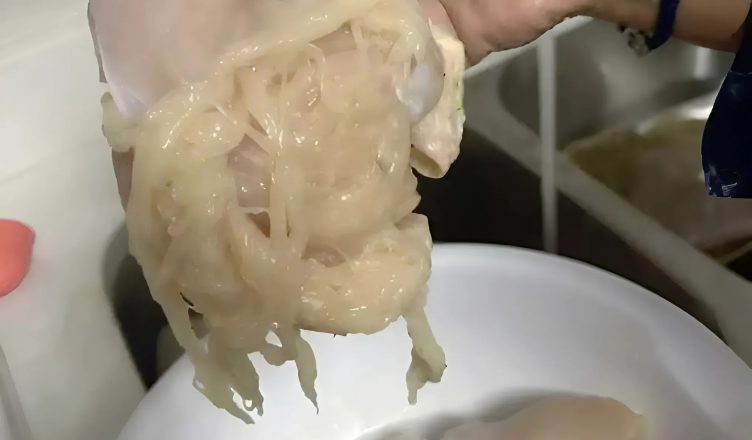
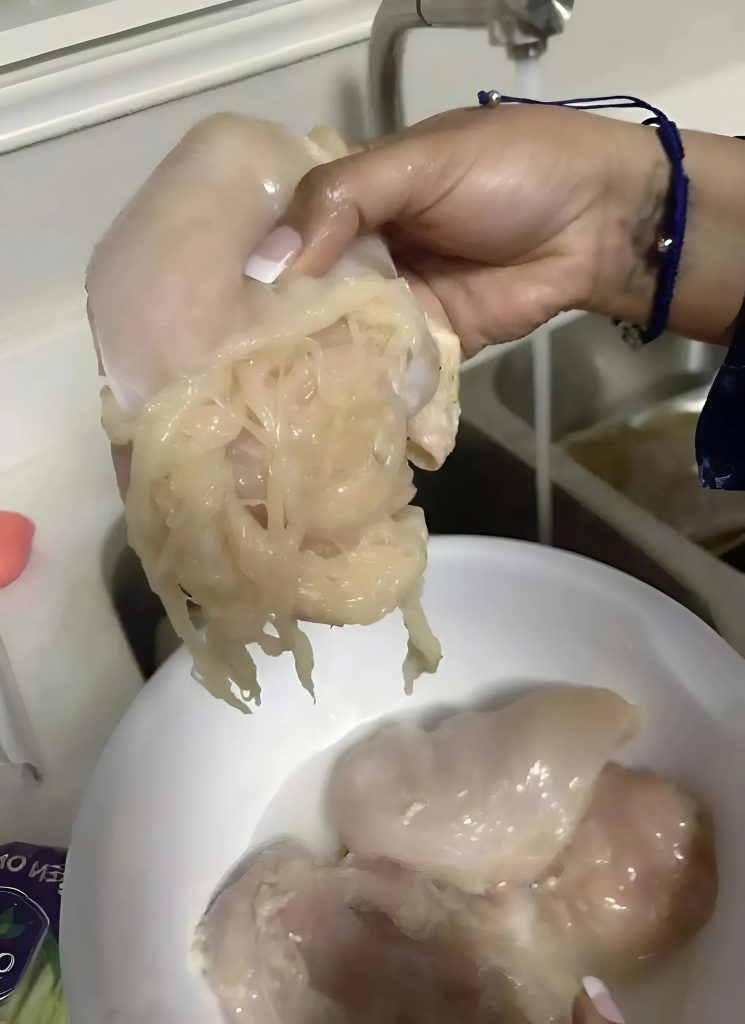
As I washed the chicken, I realized the texture was odd. Instead of feeling firm and smooth, the meat seemed to fray under my fingers. It began splitting apart into thin, fibrous strands without any pressure.
I froze, my heart pounding.
What was happening?
Was the meat spoiled?
Was it even safe to eat?
An Unsettling Discovery
I leaned closer, inspecting the chicken. It didn’t smell bad. It wasn’t discolored. There were no slimy patches, no signs of obvious spoilage.
Yet the texture was unmistakably wrong.
I could literally pull it apart into long threads.
Alarm bells went off in my mind.
I knew something wasn’t right.
I put everything down, wiped my hands, and sat at the kitchen table, opening my laptop to search for answers.
What I Found Out
After combing through several articles, I found something both surprising and disturbing.
What I had encountered was a phenomenon known as «woody breast syndrome.»
In the world of industrial poultry farming, chickens are bred to grow unnaturally fast in order to maximize production. However, this rapid growth puts a severe strain on their muscles.
As a result, the muscle fibers do not develop properly. Instead of tender, consistent flesh, the meat becomes dense, fibrous, and tough — sometimes even splitting into strands when handled.
This was not a rare or isolated case.
In fact, experts say that woody breast affects a significant percentage of commercially sold chicken, particularly larger cuts.
The realization left me stunned.
This was the reality of modern food production — and most of us didn’t even know it.
Health Implications
While «woody breast» meat isn’t considered toxic or dangerous in the traditional sense, it does have lower nutritional value.
It contains less moisture, less protein quality, and more connective tissue — which is harder for the human body to digest.
Furthermore, its very existence points to a much deeper issue:
an industry that prioritizes speed and profits over the health of both animals and consumers.
And by buying such products, unknowingly, we support practices that compromise quality for quantity.
What Should You Do if You Notice This?
If you ever find that your chicken breast is fibrous, rubbery, or pulls apart into strange threads, you should:
Avoid eating it. While it may not be «unsafe,» the texture and nutritional value are significantly compromised.
Return it to the store. Request a refund or exchange. Consumers have the right to safe, high-quality food.
Shop smarter. Where possible, buy chicken from trusted local farms or organic sources where animals are raised more naturally.
Above all — pay attention to what you eat.
In today’s fast-paced world, our health often depends on the vigilance and choices we make ourselves.
My Personal Conclusion
That evening, instead of cooking the chicken, I threw it away and raided my pantry for alternatives.
I made a warm vegetable stir-fry using lentils, fresh greens, and a simple olive oil dressing.
It wasn’t the meal I had planned — but it was clean, honest, and nourishing.
Since that day, I’ve paid much closer attention not only to labels but also to the actual appearance and feel of every piece of meat I bring home.
Because sometimes, what seems like a small detail — a strange texture, an odd smell — can reveal larger truths about the systems we depend on.
And protecting our health often starts with noticing the little things.