
In the small Ukrainian town of Varash, where life flowed quietly beneath the broad chestnut trees, the Kovalenko family lived a simple and happy life. That was, until their youngest son, Levko, was born. Arriving prematurely at just seven months, Levko’s life began with a fierce battle for survival. The doctors managed to save him, but joy quickly turned into worry: Levko suffered from partial paralysis. Half of his little body lay motionless.
It was the beginning of endless hospital visits, consultations, and exhausting therapy sessions. Oksana and Taras, parents of three, poured all their energy into fighting for their son’s future. Their home, once filled with laughter, grew quiet and heavy with uncertainty.
One gray afternoon, during yet another consultation with the renowned neurologist Dr. Galina Ivanovna, Oksana received a piece of advice she never expected:
— Buy a dog. A chow-chow or a Labrador. This is not a suggestion. It is essential.
Oksana was stunned. With three children, one of them severely disabled, how could they possibly manage a dog? How could a dog help when even the best medical care seemed powerless?
But those words stayed with her. After long conversations and sleepless nights, the decision was made. Soon, Lada, a fluffy chow-chow puppy with a signature violet tongue, joined the Kovalenko household, bringing with her an unexpected wave of hope.
From the moment she arrived, it was clear Lada was not an ordinary dog. She barely paid attention to the older daughters, Sofiika and Marta. Her focus was solely on Levko.
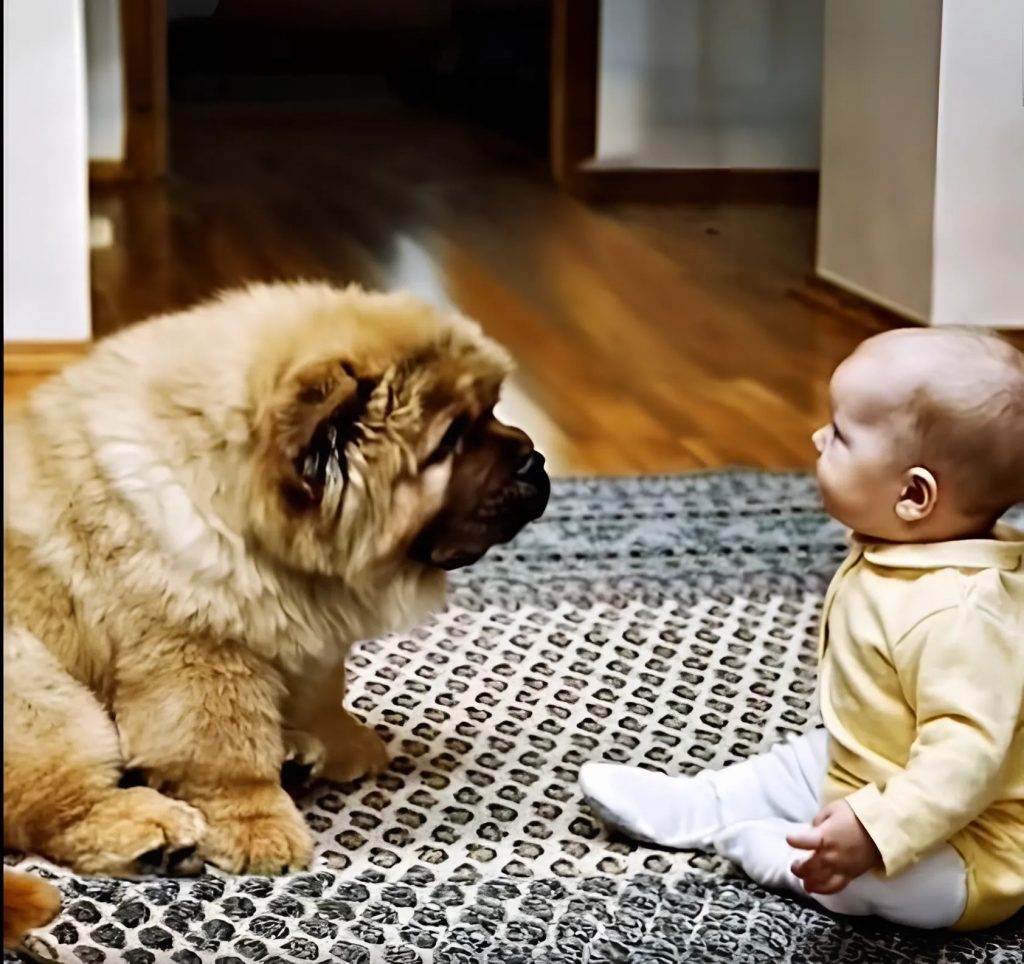
And what happened next left everyone in awe.
Lada would carefully approach Levko, nudging his limp hands and feet with her nose, gently licking them as if urging them to wake. It wasn’t rough or playful—it was deliberate and purposeful. As if she instinctively knew exactly what to do.
Weeks passed, and then, the miracle happened: Levko moved his fingers.
His parents broke into tears. The doctors, initially skeptical, had no explanation but one—somehow, something had sparked his neural responses.
Lada continued her work tirelessly. She would lay beside Levko, gently pushing his arms and legs, encouraging him with her quiet presence. Slowly, Levko began to lift his head, reach out toward the soft, warm fur of his loyal companion.
Every tiny improvement brought renewed hope to the Kovalenko family. The once-silent home began to echo once again with laughter and joy.
Word of Levko and Lada spread rapidly. They were invited to schools, therapy centers, and local events. Everywhere they went, their story inspired people.
When Levko took his first uncertain steps, Lada was right there, walking proudly beside him—steadfast, loyal, and protective.
Today, Levko runs, plays football, dreams of becoming a veterinarian. And Lada remains at his side, his unwavering friend, his guardian, his living miracle.
This story reminds us that sometimes miracles arrive in the most unexpected forms: with four paws, soft fur, and a heart bursting with unconditional love.