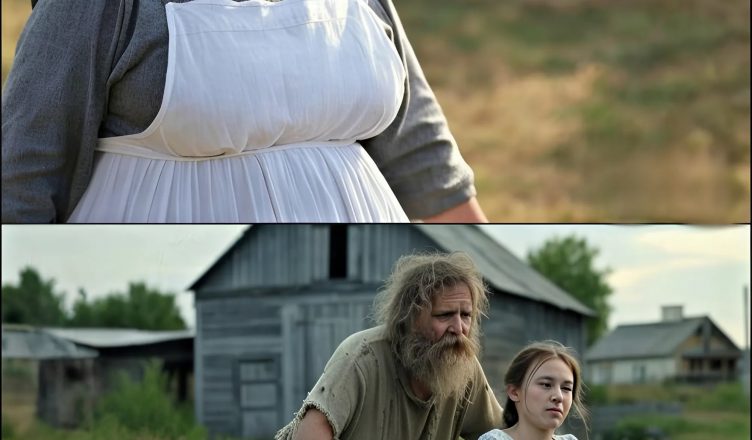
Marina believed she was unlucky in life. She rarely said it out loud — what was the point? It was written all over her face, in her posture, in the tiredness of her eyes. From a young age, she dreamed of escaping her village, starting a life in the city, marrying a good man, and living happily ever after — without dragging stubborn cows through mud and frost before dawn. And for a short while, it seemed she had made that dream come true.
She left the village after school, completed vocational training, got a job at a textile factory, and moved into a workers’ dormitory. Everything was finally moving forward. Then she met Sergey — tall, charismatic, a factory mechanic. They fell in love quickly, got married even faster. At first, it was perfect: hand-in-hand walks, quiet evenings, shared dreams.
But within a year, the illusion shattered.
Sergey began drinking. First occasionally, then often. He became irritable, then violent. One slap turned into many. The love faded, leaving behind fear and loneliness. Marina held on for as long as she could, but when he disappeared one night and never came back, she let him go. She was pregnant.
She gave birth to a baby girl — Olya. With the city job gone and no means to pay for rent, Marina packed what little she had and returned to her late grandmother’s old wooden house in the village she had once desperately tried to leave.
She found work as a milkmaid at the local farm. Mornings began before sunrise, feet wrapped in scarves against the cold, walking through snow to the barn. There, steam from the cows mixed with her breath in the frozen air. She worked in silence, exhausted but determined to keep going — for her daughter.
Olya was everything to Marina. A quiet, thoughtful child. She loved books, colors, and the gentle company of animals. But tragedy struck again. Around age eight, Olya’s legs weakened. First she stumbled, then fell often. The diagnosis came late: a rare neurological condition. Incurable. The doctors confirmed what Marina had feared — her daughter would never walk again.
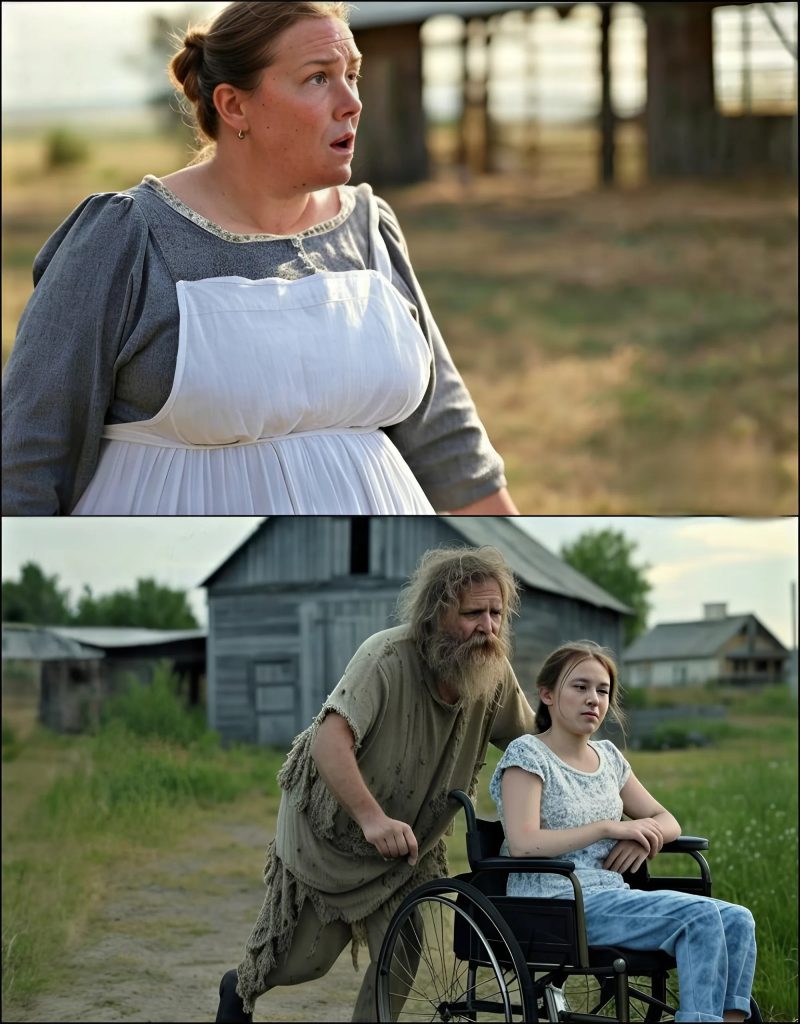
She was devastated, but didn’t give up. Marina became nurse, teacher, and mother all at once. She carried her daughter through hallways and across seasons. She applied ointments, whispered bedtime stories, and fought the ache in her back without ever complaining.
They lived simply, day by day. Occasionally, volunteers from nearby towns brought donations — a few clothes, some books. Olya never complained. She read constantly, drew quietly, and smiled often. But she was lonely. Other children avoided her. They didn’t know what to say to a girl who couldn’t run.
Then, one spring day, a stranger arrived.
He appeared out of nowhere. A tall man in a tattered coat, with a worn backpack and a distant gaze. He said little. The villagers called him a vagabond. He slept in sheds or under the stars, helped locals in exchange for meals — fixing roofs, chopping firewood, mending fences. His name was Vadim.
No one knew his story, and he didn’t offer one. Some suspected prison. Others whispered about war or grief. But he never asked for anything, and he never caused trouble.
It was Olya who spoke to him first. She was sitting outside, sketching the old barn. Vadim stopped to look.
“You draw well,” he said softly.
And from that day on, he started coming back.
At first, Marina was alarmed. A strange man, alone with her disabled daughter? But she watched closely — and what she saw made her heart soften. Vadim brought books. He carved small animals out of wood. He told stories — wild, imaginative ones that made Olya laugh until she cried.
He didn’t touch the past. He didn’t pry into theirs. But he became part of their world — in small, quiet ways. He chopped wood, repaired the back fence, cleaned out the shed. And most of all, he gave Olya something Marina had long thought lost: joy.
Then came the moment that changed everything.
Marina came home earlier than usual. As she passed the neighbor’s fence, she overheard hushed voices.
— That drifter, Vadim, he took your girl to the bathhouse, said he was helping her bathe.
— What? — Marina’s stomach dropped.
— I saw them go in. Just the two of them.
Panic flooded her. Without hesitation, she ran toward the old wooden bathhouse behind the barn. The door creaked as she yanked it open. Steam billowed out. Her heart pounded.
And then — she stopped.
Inside, Olya sat in a makeshift wooden tub, surrounded by gentle bubbles and warm steam. Her cheeks glowed, her hair slicked back. Vadim was kneeling beside her, carefully pouring warm water over her head with a ladle. His eyes were averted. His hands were steady. He didn’t touch her. He didn’t even look.
Olya laughed.
— Mama! He made me a bubble bath! Just like in the stories!
Marina stood frozen. This wasn’t what she’d expected. There was no fear. No shame. Just a simpl