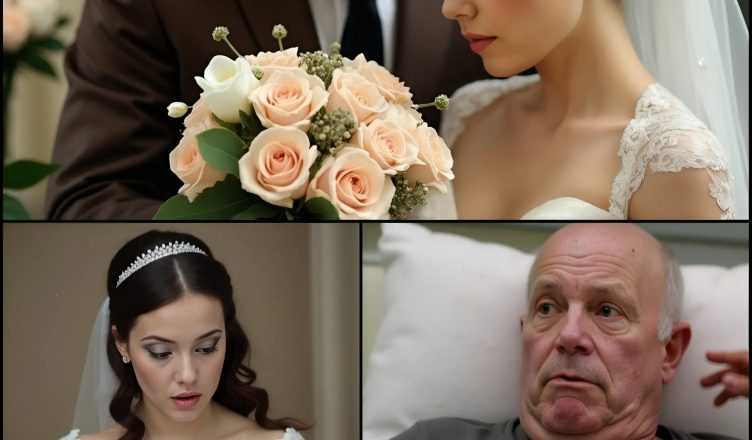
Anna stood at the window of her cramped apartment, the gray March sky heavy with the promise of another cold evening. The city outside moved in its usual rhythm—hurried steps, silent stares, forgotten dreams. She was 23, young by every standard, but already worn thin by life. Her hands trembled as she held her tea, her thoughts drifting not to the wedding that had just taken place three weeks earlier, but to what had followed.
Anna had just married Émile, a 60-year-old widower, and the reactions from those around her had been predictable and vicious.
«She must be after his money.»
«She’s desperate.»
«That man should be ashamed.»
But none of them had stopped to consider the possibility that something more complicated, more human, and far less comfortable was behind the union.
Anna had met Émile in the waiting room of a government office. He was there sorting out pension paperwork; she was trying to correct a bureaucratic error that had cut her student grant. Their conversation was brief, casual, but something lingered. He was kind, attentive, and perhaps the first person in months to look her in the eyes without judgment. They ran into each other again a week later in a bookstore. And again the next week at a local café. What started as chance soon became routine.
It wasn’t romance. Not then.
Anna was drowning. Her job at the advertising studio paid barely enough to keep the lights on. She had debt, no family to fall back on, and an overwhelming sense that her life was narrowing by the day. Émile, for his part, was alone. His wife had died two years earlier, his only son had moved abroad, and he had just been diagnosed with a terminal illness—a slow, cruel disease that would rob him of dignity long before it took his life.
One evening, in that same bookstore where they had shared quiet glances across the aisles, Émile made an offer. He wanted someone to be with him—not out of pity, not out of obligation, but out of agreement. He offered her stability. A place to live. Some financial security. In return, he asked for companionship. And eventually, help to end his life when the time came.
Anna didn’t answer right away. She left, walked for hours in the cold, asked herself a thousand questions, and cried more than she had in years. But days later, she returned and said yes. Not because of the money. Not entirely. But because she understood what it meant to be invisible, to be unheard, to be tired.
The marriage was simple. A quiet civil ceremony. No guests. No fanfare. Just a signature and a vow neither of them spoke aloud but both understood.
Three weeks later, as they sat together after dinner, Émile brought it up. He didn’t ask her to do it then—not yet—but he wanted to know if she remembered her promise. If she still meant it.
Anna froze. She had thought about it in abstract terms, the way one thinks of distant war or other people’s tragedies. But now it was real. Tangible. It sat across from her in the form of a gentle man who just wanted not to die in pain.
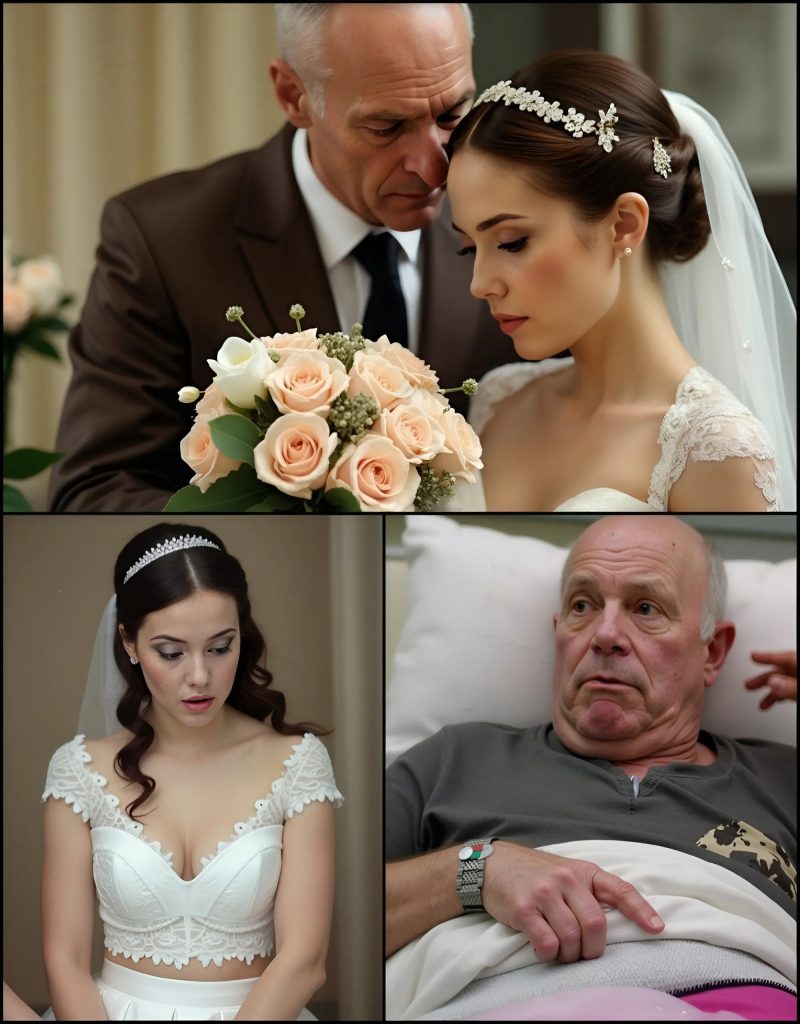
The days that followed changed everything. Anna began to see Émile not as a patient or a transaction, but as a person. They spent their evenings reading. She introduced him to her favorite films. He taught her how to fix watches, a skill he had spent his life perfecting. She began to laugh again, softly at first, then more freely. He, too, seemed to come back to life.
And then something neither of them expected happened.
Émile’s condition stabilized.
Not healed. But slowed.
Doctors were cautiously optimistic. He had more time—months, maybe years. It was uncertain, but it was more than they had believed possible. And something shifted between them.
Their days grew longer, fuller. They cooked together. Traveled once, to a nearby coastal town. He watched her sketch by the sea. She watched him watch her. And somewhere between the ticking of clocks and the hush of shared silence, they began to fall in love.
It was not the passionate, breathless love of youth. It was not built on desire or urgency. It was built slowly, deliberately, with care and trust and the knowledge that time was borrowed.
When people saw them now, they still judged. Still whispered. Still wondered.
But Anna no longer flinched at the looks. She no longer cared for their opinions.
She had married a man who had expected to die. Who had offered her a strange bargain. And in doing so, she had found not just safety—but meaning. They had rescued each other in different ways.
The story, when it spread, became a twisted reflection of the truth. On social media, people debated whether she had “used him” or if he had “manipulated” her. But none of them were there for the quiet evenings, for the moments where a shared silence was more intimate than touch.
They didn’t know that he had since changed his will to leave her nothing—at her request. She hadn’t stayed for money. She stayed because she wan